Somatic Exercises for Hips: Support Natural Fat Loss
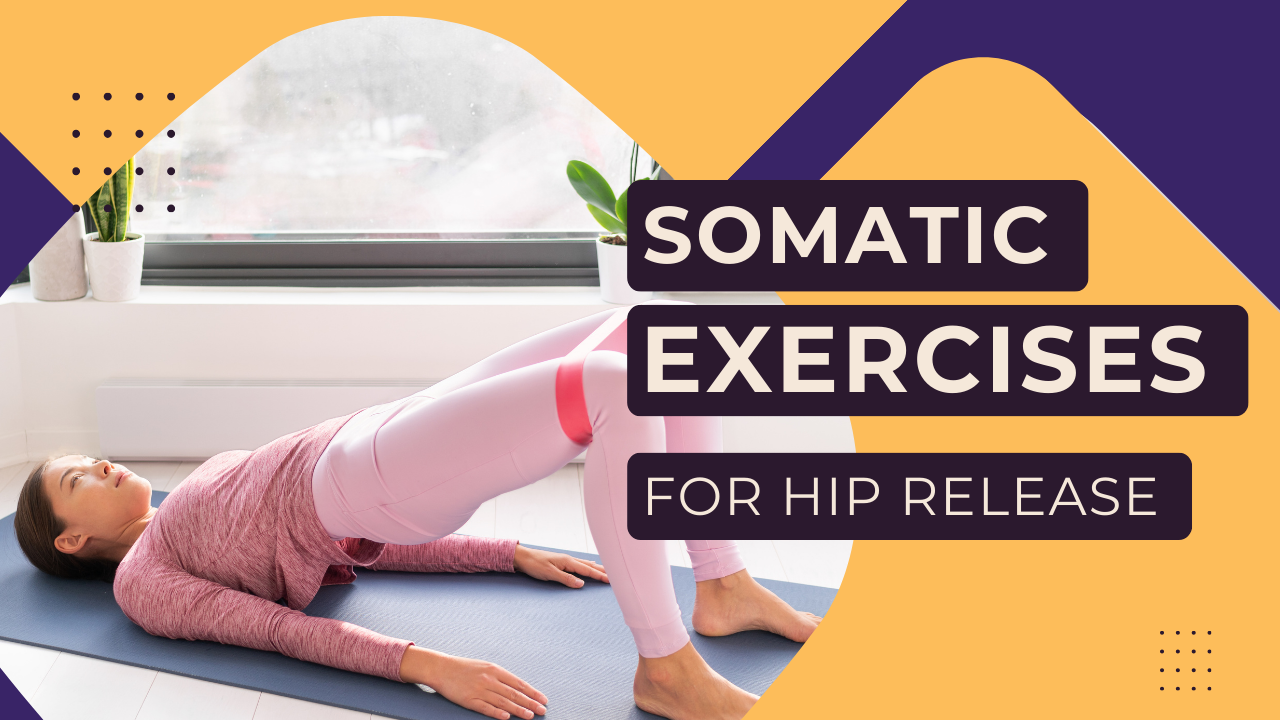
Many ladies feel like their hips are tight and they cannot lose weight at the same time. You can eat healthier and walk more, yet your body will still feel like it is holding on. That can be annoying, especially when you are trying to do the right thing.
Somatic exercises for hips for weight loss are a less harsh technique to start breaking that habit. These somatic exercises for hips focus on soothing the nervous system and letting go of protective tension stored in the body. When you feel safer in your body, it becomes simpler to move, sleep, and make healthier choices. These three changes strongly support natural fat loss over time.
Stress and Hips
Why do hips grow tight?
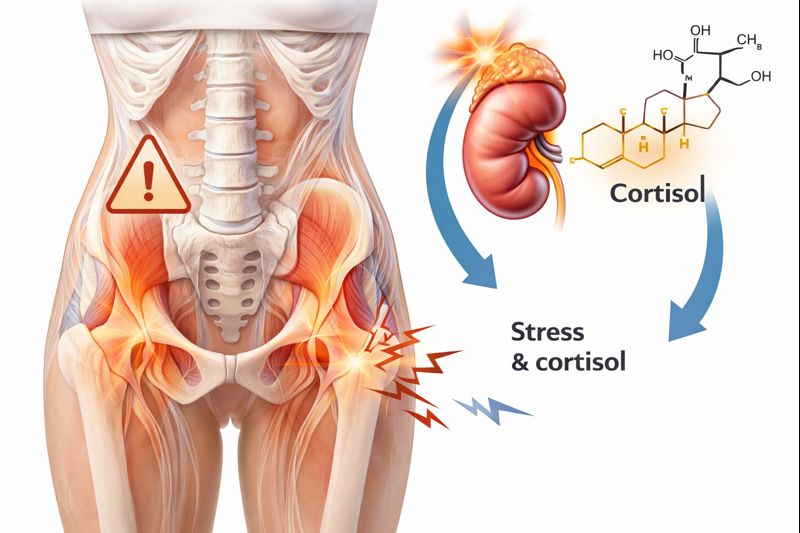
Your hips are a “busy intersection” in your body. There are big muscles, deep stabilisers, and dense layers of fascia all in one place. Many people might not even realise it when they tense their hips when life gets stressful. It is not being weak. Your body is trying to keep you safe.
The fight-or-flight system kicks in when you are stressed. Your breathing becomes shallow. Your muscles go tense. Your posture alters. Over time, this can make the hips feel stiff, heavy, or uncomfortable, especially after sitting for a long time.
The connection to cortisol
Your body makes cortisol, a hormone that helps you deal with stress. Having cortisol is normal. The problem is that stress stays elevated for too long. Studies have associated stress-induced cortisol patterns with alterations in fat distribution, particularly in the waist and abdominal region among women. (PubMed)
Now, here is the most important thing: calories are not the only thing that matters for belly and hip fat. For a lot of women, they also have to do with how well they sleep, how much stress they have, and how hormones work. When your body is “on alert,” it may be easier for it to handle stress and store energy.
Somatic Reset
What “somatic” truly implies
“Somatic” just means “felt in the body.” Somatic exercises for hips use slow, deliberate movement that helps your brain and muscles communicate more effectively. Many somatic methods include a technique called pandiculation, which is a gradual rhythm of contracting and releasing that teaches tense muscles how to relax again. This approach makes somatic exercises for hips especially effective for releasing deep, protective tension held in the body. (Somatic Movement Centre)
This is not the same as making a deep stretch. Stretching can assist, but not all bodies like it. The goal of somatic work is to first lower the “protective brake,” and then the movement will naturally get better.
Why “soft” can be better than “hard”
Hard workouts can feel like more stress if you are already anxious. Exercise is good for you, but how hard you do it counts. Studies on exercise and hormones indicate that cortisol responses differ according to intensity and training load. (PMC)
That is one reason why some women do better with a calmer foundation first:
- Walking
- Gentle movement
- Breathing
- Strength training that does not wear them out
Stress Is Held in the Hips
Fascia and “stuck” tension
Fascia is connective tissue that surrounds muscles and helps them move. Fascia can feel tight when muscles are tense. Clinical and rehabilitation studies on myofascial techniques indicate that enhancing fascial and muscular tension may alleviate pain and enhance mobility in certain circumstances. (PMC)
You do not have to think that your hips hold “trauma” in a magical sense to get something out of this. A practical approach is all you need: stress affects respiration, posture, and muscle tone. Over time, the hips become a typical place to brace.
The “protective posture” pattern
A lot of ladies start to act like this without even knowing it:
- Breathing shallow and ribs down
- Pelvis bent or wedged
- Glutes not working hard enough
- Hip flexors working too hard
- The lower back trying too hard
Somatic work helps you see these tendencies and safely get rid of them.
A Quick Self-Check
Here is a quick approach to check if your body could be too stressed for hard training right now. (This is not a diagnosis; it is just a useful check-in.)
| Sign you see a lot | What it might mean for losing weight and hips |
| You wake up feeling exhausted. | Low recovery, high stress load possible |
| Hips that are tight after sitting. | Bracing that protects may be “stuck on.” |
| Wanting something late in the afternoon. | Stress and changes in blood sugar levels could be making you hungry. |
| Sleep is not deep or broken. | Hormone rhythms might get messed up. |
| Workouts are harder than normal. | You might need to rest more or lessen the intensity. |
If you can connect to a lot of these, somatic exercises for the hips might be a good “first step” before you push yourself more.
Why This Helps You Lose Weight
It helps you make smarter choices
Somatic work will not make you lose weight magically. But it can help you lose fat in practical ways:
- Less tension in the hips might make it simpler to walk and lift weights.
- Breathing more slowly can help stop stress eating.
- Getting more sleep helps with hunger hormones and energy.
- Less pain often means being able to move more every day.
These are the “quiet wins” that pile up.
It stops the “all-or-nothing” cycle
A lot of women start out strong and then fall apart. They work hard for two to three weeks, grow sore, have trouble sleeping, and feel bloated, and then they stop. Gentle somatic practice helps you keep on track because you can perform it even when you do not have a lot of energy.
For long-term change, consistency is better than intensity.
Takeaway
Your body may be calling for safety before it begs for intensity if you feel tight hips and resistant weight. That is why somatic hip release exercises can be such a great way to start. They help relax the part of the brain that makes you brace, crave, sleep poorly, and work out with limited energy.
Some women combine mild movement with liver-focused metabolic support like Hepato Burn to get extra help with somatic exercises for hips.
Exercises for the Hips That Use the Body
Soft Moves That Tell the Body It Is Okay to Burn Fat
When the nervous system is calm, muscles relax, respiration gets deeper, and moving is easier. This is the state in which the body is more likely to let go of stored stress and help with natural fat loss. The purpose of somatic exercises for hips is not to “force” flexibility or burn calories. The idea is to get the brain and hip muscles to talk to each other again so they can relax and move freely.
These movements are gradual and steady and do not hurt. They do not fight with your nervous system; they operate with it. Studies on gentle mobility and neuromuscular re-education reveal that taking your time to contract and release will help your muscles work together better and lower defensive guarding.
Clock for the Pelvis
Letting go of deep hip tension
- Put your knees up and your feet flat on the floor.
- Think of your pelvis as the face of a clock.
- Gently tilt your pelvis towards 12 o’clock (this will make your lower back press down somewhat).
- Then at 6 o’clock, a little arch.
- Move slowly from 3 to 9 o’clock.
- Make the movements small and smooth.
This technique wakes up the deep stabilisers in the hips and spine. It makes you more conscious and breaks the “holding” tendency that keeps muscles stiff.
Knee Fall-Outs
How to safely teach your hips to relax
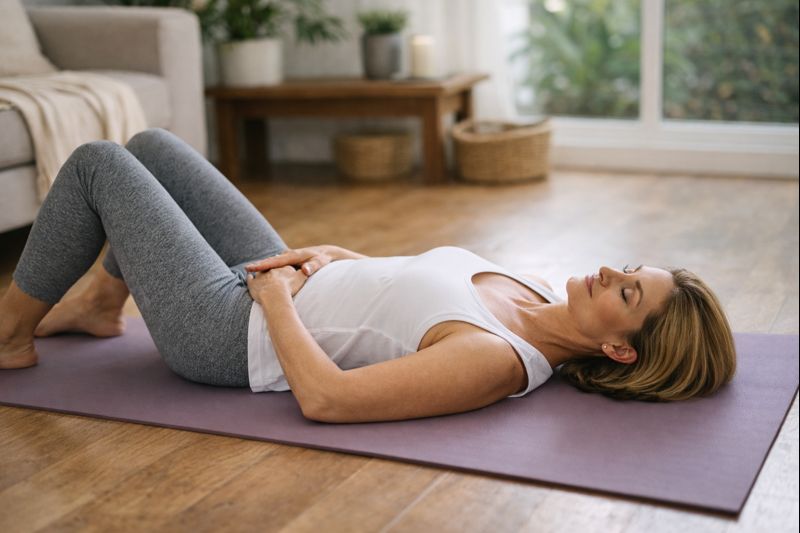
- Keep your legs bent and stay on your back.
- Let one knee slowly fall to the side, and then bring it back.
- Switch sides.
This teaches the hip joint that it can move without risk. The nervous system starts to relax, which can help blood flow and movement in the pelvis and groyne.
Hip Stretching
The rest of the contract and release
Pandiculation is an important part of somatic movement. You softly let go of a muscle after gradually tightening it.
For example:
- Pull one leg towards your chest a little while lying on your back.
- Gently push the leg into your hands (a mild contraction).
- Let go slowly and let the leg stretch out and relax.
This tells the brain to “reset” the tone of the muscles. Over time, it can help ease persistent tightness in the glute and hip flexor muscles.
Breathing with a Pelvic Tilt and Diaphragm
Calming cortisol and core stress
- Put one hand on your chest and one on your stomach.
- Take a breath so that your belly rises more than your chest.
- When you breathe in, softly tilt your pelvis forward.
- Let it come back as you breathe out.
The parasympathetic nervous system is activated when you breathe slowly, which is a key part of somatic exercises for hips. This response is linked to reduced levels of stress hormones and faster recovery. Research indicates that breathing patterns used in somatic exercises for hips can influence autonomic balance and improve the body’s stress response.
Hip Circles While Sitting
Getting joints to trust again
- Get in a chair.
- Move your hips in small, leisurely circles, as if you were drawing circles on the seat.
This makes the joints more slippery and helps the brain feel safe moving in all directions. A lot of women feel less stiff after only a few minutes.
When to Practice
The greatest time to practise somatic exercises for the hips is when the body is naturally slowing down:
- Before breakfast in the morning
- Night before bed
- Before going for a walk or doing some strength training
- If you sit for long periods of time at work
If you do it every day, 10 to 15 minutes can make an impact.
How This Helps the Metabolism
Somatic movement does not immediately “burn fat” like cardio does. It does this instead:
- Lowers the tension in defensive muscles
- Makes breathing more efficient
- Helps you sleep better
- Lessens eating when stressed
- Makes other workouts seem simpler
All of these things assist in making the body more inclined to lose fat naturally.
Pairing with Nutrition and Gentle Help
When the nervous system is less stressed, digestion and the body’s ability to absorb nutrients often get better. This is one reason why many women do somatic exercises for their hips and eat foods that are good for their stomach and metabolism.
For instance, programmes that focus on balancing the microbiota and lowering inflammation may work better when stress levels are lower. LeanBiome is one such solution that helps with good digestion and controlling your appetite:
https://tinyurl.com/2wmmpafkz
Now we will talk about how soothing the hips and nervous system can help balance hormones and how natural supplements and gentle daily routines can work together to help you lose weight in a healthy way over time.
Hormones and Healing
Helping with fat loss after hip release
The body becomes more open to good habits when the hips start to relax and the nervous system calms down. This is where somatic workouts for the hips help with long-term natural fat loss in a quiet way. They do not take the place of eating well or moving. Instead, they help the body take them in better.
Sleep gets better when stress goes down. Hunger hormones become more balanced when you sleep better. It is easier to choose food when you are not too hungry. This chain response is one of the best ways that moderate nervous system training helps body composition.
Studies on sleep, stress, and metabolism indicate that inadequate sleep and persistent stress can disrupt insulin sensitivity and appetite regulation.
Somatic work helps remove one of the biggest barriers to continuous progress by calming the system.
The Connection Between Hormones and Hips
Why women notice changes here initially
The hips are affected by:
- Balance of oestrogen
- Cortisol cycle
- Sensitivity to insulin
- Patterns of activity every day
Cortisol levels can stay high while stress levels remain high. This could change how the body stores fat and make it take longer to recover. Research indicates that in women, stress hormones and sleep disturbances can affect fat storage locations and its release efficiency.
Somatic movement does not directly alter hormones. It helps the environment so that healthy hormone signalling can act regularly again.
Hips, Brain, and Gut
The triangle that calms you down
The gut, brain, and nervous system are always talking to each other. This is commonly dubbed the gut-brain axis. This network gets information from your breathing, posture, and muscle tone.
When your hips are always tight:
- Breathing stays shallow a lot of the time.
- The diaphragm does not move all the way.
- The vagus nerve is not as active.
- The rhythm of digestion can slow down.
Moving slowly and breathing deeply helps the vagus nerve and the parasympathetic nervous system work better. Studies demonstrate that this can help with digestion, mood, and recovery.
This is why a lot of women say that after a few weeks of hip somatic exercises, their bloating goes down and their energy levels become more stable.

Daily Habits That Keep Results
- After doing somatic work, go for a walk.
A 10–20 minute relaxed walk following hip release helps the new movement patterns “stick”. It also increases circulation and helps you breathe more calmly. - First, eat protein.
Eating protein at the beginning of meals can help keep blood sugar levels stable and cut down on cravings later in the day that are caused by stress. - Fascia needs water.
When the body is sufficiently hydrated, fascia moves better. Try to drink the same amount of water all day. - Sleep with hip support.
Putting a pillow between your knees while you lie on your side will help you sleep better and keep your hips safe at night.
How Supplements Fit Softly
Natural supplements work best when the body is not always in fight-or-flight mode. High levels of cortisol can disrupt digestion, absorption, and hormone signalling.
Some ladies prefer to add to their routine after doing somatic exercises for their hips to soothe their nervous system:
- Nutrients that help the liver
- Formulas for gut health
- Plant compounds high in polyphenols
- Blends for metabolic support
These are not shortcuts. They are tools that operate better when you have a good foundation of sleep, exercise, and stress management.
Why This Method Will Last
Many hard programmes do not work because they do not take recuperation into account. If your nervous system feels unsafe, it will fight change. A system that is quiet changes.
Work with the body:
- Lowers the danger of getting hurt
- Makes things more consistent
- Helps with controlling emotions
- Makes other exercises seem easy
- Helps people create habits that last a long time
That is why a lot of doctors and physical therapists now integrate moderate nervous-system-based movement in their regular fitness and rehabilitation programmes.
Takeaway
The body becomes more cooperative when the hips relax and the nervous system calms down. It is easier to tell when you are hungry. Sleep gets deeper. It feels safer to move. This is the place where losing fat naturally becomes possible instead of forced.
Some women adopt plant-based diets to help them stay calm and boost their metabolism while doing hip exercises. These diets include:
Smoothie Diet Programme (nutrient-rich and good for the gut):
https://tinyurl.com/mwrezbrp
Ikaria Lean Belly Juice is a metabolic support drink that is high in polyphenols.
https://tinyurl.com/5c55czae
Final Thoughts
It is not about pushing harder when you do somatic movement. It is about making your body feel safe enough to let go of stress and tension that has built up. When the hips relax, it gets easier to move around during the day, sleep gets better, and breathing gets deeper. These little modifications make the internal environment that helps steady, healthy growth.
Many women find it easier to calm cortisol, enhance mobility, and assist natural fat reduction without tiring their bodies when they do somatic exercises hips on a regular basis. Be gentle at first, stick with it, and give your nervous system time to readjust. Try this method and see how your body reacts. Then, with time and care, expand on what you learn.
Common Questions (FAQs)
Do somatic workouts really help you lose fat in your hips?
Somatic workouts do not immediately burn fat. They help relax the nervous system, ease stress, and make movement easier, all of which can help with the conditions that are necessary for healthy fat reduction.
How long does it take to see changes in hip tightness?
When women practise for 10 to 15 minutes every day, they often feel better in one to two weeks.
Are somatic exercises safe for people who are new to them?
Yes. They do not hurt and are low-impact when done carefully.
Can I practise somatic exercises even though my hip hurts?
Most of the time, gentle motions are harmless, but anyone who is hurt or has a medical issue should talk to a doctor first.
Do these workouts help those who gain weight because they are stressed?
They can help soothe the stress response, which may help with emotional eating and tension caused by cortisol.
How often should I work on it?
Short sessions every day are better than long ones that happen only once in a while. It is more important to be consistent than to be intense.
Can somatic practice take the role of workouts?
No. It gets the body ready to move better, which makes walking, strength training, and eating well even better.
Is this okay for women over 40?
Yes. Many women who are going through perimenopause or menopause discover that somatic work helps their joints feel better and their nervous system stay in balance.
What time of day is ideal to do it?
You can do it in the morning, before bed, or before light activity.
Can I do somatic exercises and use natural supplements at the same time?
Yes, mild activity and dietary support can work well together if you utilise them sensibly and with the help of a professional.
Medical Disclaimer
This article is for educational purposes only and does not provide medical advice. Somatic exercises and natural supplements may not be suitable for everyone. Always consult your physician or a qualified healthcare professional before starting any new exercise routine, dietary change, or supplement program, especially if you are pregnant, have medical conditions, or are taking medications.